
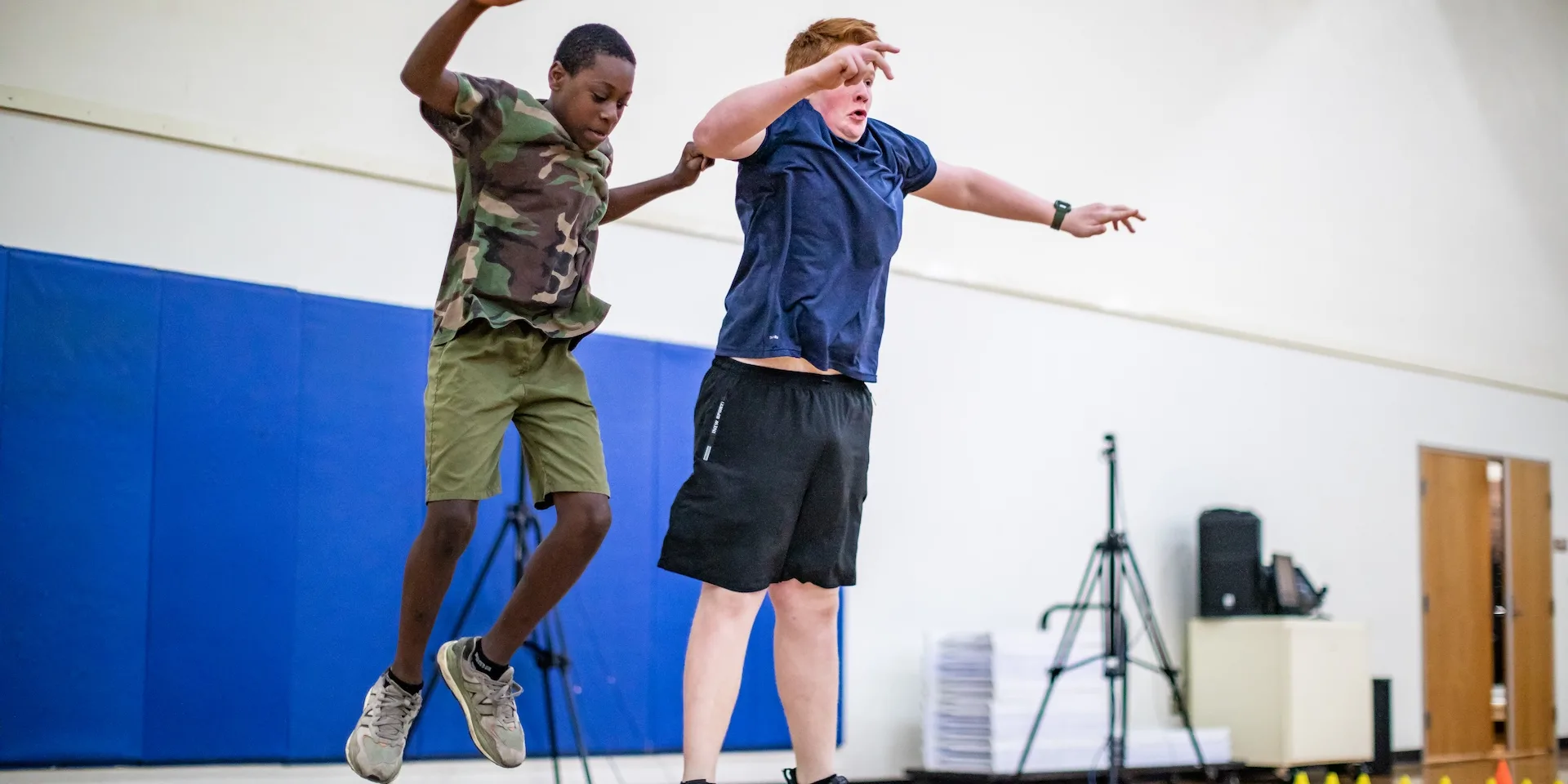
- AI-Play aims to connect AI concepts to learners’ own movements and experiences
- The multidisciplinary project is part of UF’s AI-Powered Athletics Initiative.
- The work will be done via after-school programs at Alachua County public schools.
What if elementary school students could learn how artificial intelligence works by moving, jumping and playing? A multidisciplinary team of University of Florida researchers is exploring that question through AI-PLAY, a new NSF-funded project that connects students’ own movements to foundational AI concepts.
Kristy Boyer, Ph.D., a professor in UF’s Department of Computer & Information Science & Engineering, and Jennifer Nichols, Ph.D., an associate professor in the J. Crayton Pruitt Family Department of Biomedical Engineering, are part of the research team, along with Anthony Botelho, Ph.D., an assistant professor in the College of Education. Through after-school programs in Alachua County public schools, fourth- and fifth-graders will use sensors to create and explore their own movement data while learning how computers perceive the world, how AI learns from data and how AI can affect society.
AI-PLAY grew out of UF’s AI-Powered Athletics Initiative, bringing tools and approaches used to study human movement in athletics into AI education.