Podcasts are a relatively new form of media that have taken the internet and beyond by storm. But what exactly is a podcast? They can be traced back to 2004 when iPods were used to listen to audio and stories, hence the name pod-cast. From the start of the digital age to today, podcasts have grown to span across hundreds of genres and cover a myriad of topics. You may find podcasts that feature people talking about their lives, true-crime podcasts, religious podcasts, political podcasts, comedy podcasts, gameshow podcasts, and beyond. If you can imagine a genre or topic, there's probably a podcast about it.
One thing that makes podcasts special is their medium: audio. They're designed to be extremely accessible, with most podcasts being free on YouTube, Spotify, or other streaming platforms. Podcasts only take up your sense of hearing, leaving you free to walk around, do tasks, and be productive while simultaneously being entertained. My favorite genre of podcasts is that which tells a story. Choosing to tell a story via podcast rather than writing a book and making an audiobook is an intentional choice. Storytellers can use audio engineering to add sound and voice effects to their work, enhancing the listening experience for audiences and adding a newfound sense of realism. Listeners can create pictures and movies in their minds when a story is conveyed to them in this format.
One such storytelling podcast that has entertained and terrified audiences since 2016 is The Magnus Archives. The Magnus Archives is a fictional horror tragedy podcast produced by a London-based network called Rusty Quill, written by Jonathan Sims, and directed by Alexander J. Newell. This podcast spans over 5 seasons, having ended in 2021 with exactly 200 horrifying 20-25 minute-long episodes. A spinoff series, called The Magnus Protocol, was publicized in January 2024 and is currently being released weekly.
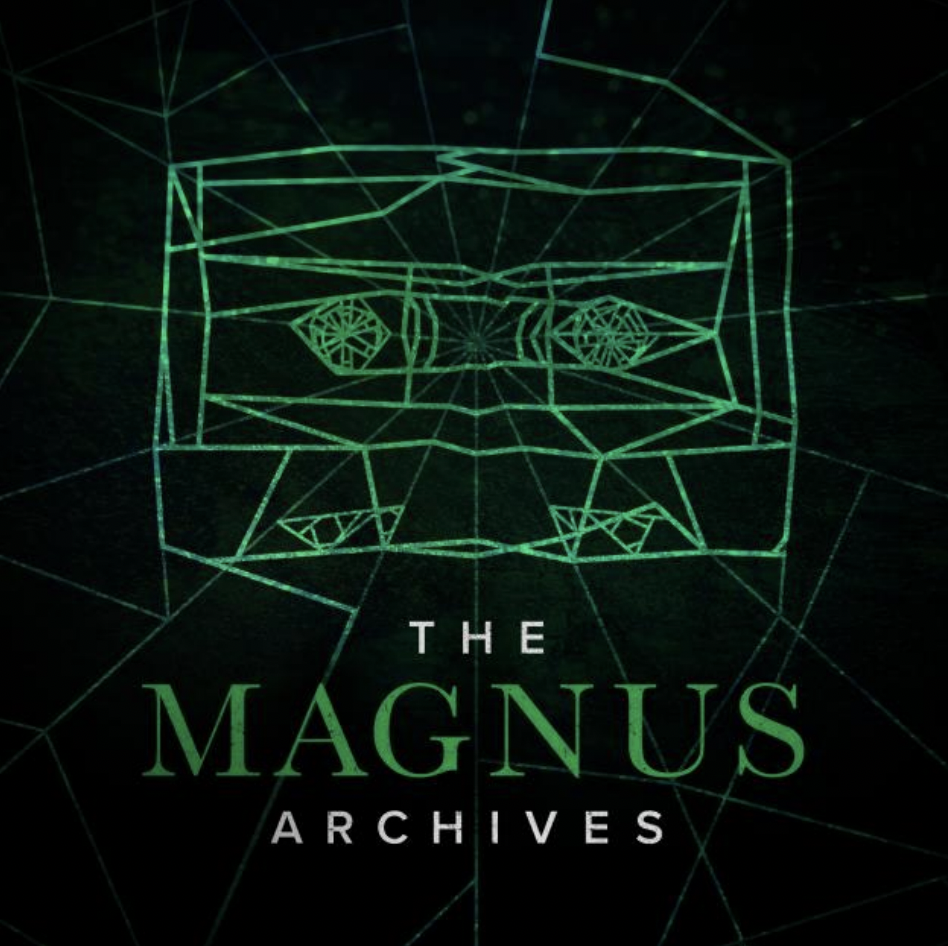
You might wonder how a sense of horror could be conveyed by a podcast, but you need not look further than Episode 1 of The Magnus Archives to answer that question. The entire series is engineered to sound as if it is being captured via cassette tape recorder, adding a grainy, found-footage quality that unsettles listeners from the start. The podcast's logo, as pictured to the right, reflects this audio-engineering choice since it depicts a cassette tape made of glowing green webs. This conveys not only the erie, complex mood of the series but also hints towards relevant plot points.
The story follows Jonathan Sims, the head archivist of The Magnus Institute in London. This institute is charged with investigating paranormal and terrifying incidents around the globe. And yes, the main character was named after and is voiced by the podcast's creator.
At first, the series appears to be somewhat of an anthology, with Jonathan archiving and logging "statements" about frightening events on his tape recorder. As the podcast progresses, however, an intricate web of connecting stories and themes is laid before us, calling the main characters and listeners alike to question if these statements have any truth to them after all. The audience jumps between tape recordings of statements to the "real-life" investigations, conversations, and experiences that the main characters have with the fear-inducing mysteries of The Magnus Archives' universe.
In a medium where the only way to convey your story is via dialogue and sound effects, The Magnus Archives excels. The cast of beloved main characters is developed extremely intricately, leading listeners to get attached to nearly every character that appears. The dialogue is realistic and detailed, almost making audiences believe they are listening to real conversations, with several comedic moments slightly lightening the tone of the series. Sound effects like characters walking, typing, and a myriad of eerie, terrifying noises are added in post-production to create an extremely authentic recording.
The first few seasons can be enjoyed as an anthology out-of-order, but it's typically recommended that you listen to the episodes in-order to build up the universe and story as it develops. This series is designed to frighten listeners and leave them unsettled, so I highly recommend reading the trigger warnings listed with each episode, since there is copious existential horror and body horror in this series. I don't usually enjoy horror since scary visuals frighten me, but The Magnus Archives captured my curiosity and terror, unlike anything I've listened to before. With expert sound design, an incredibly intricate story, and realistic characters, The Magnus Archives is guaranteed to be a terrible, wonderful experience.